

Chutes — Pneumatic Waste Systems
Pneumatic Waste Collection Systems
Fully automated, vacuum-powered waste transport for hospitals, high-rise buildings and urban developments. Waste travels from floor inlet to central collection plant through sealed pipelines — hygienic, odour-free and without any manual handling.
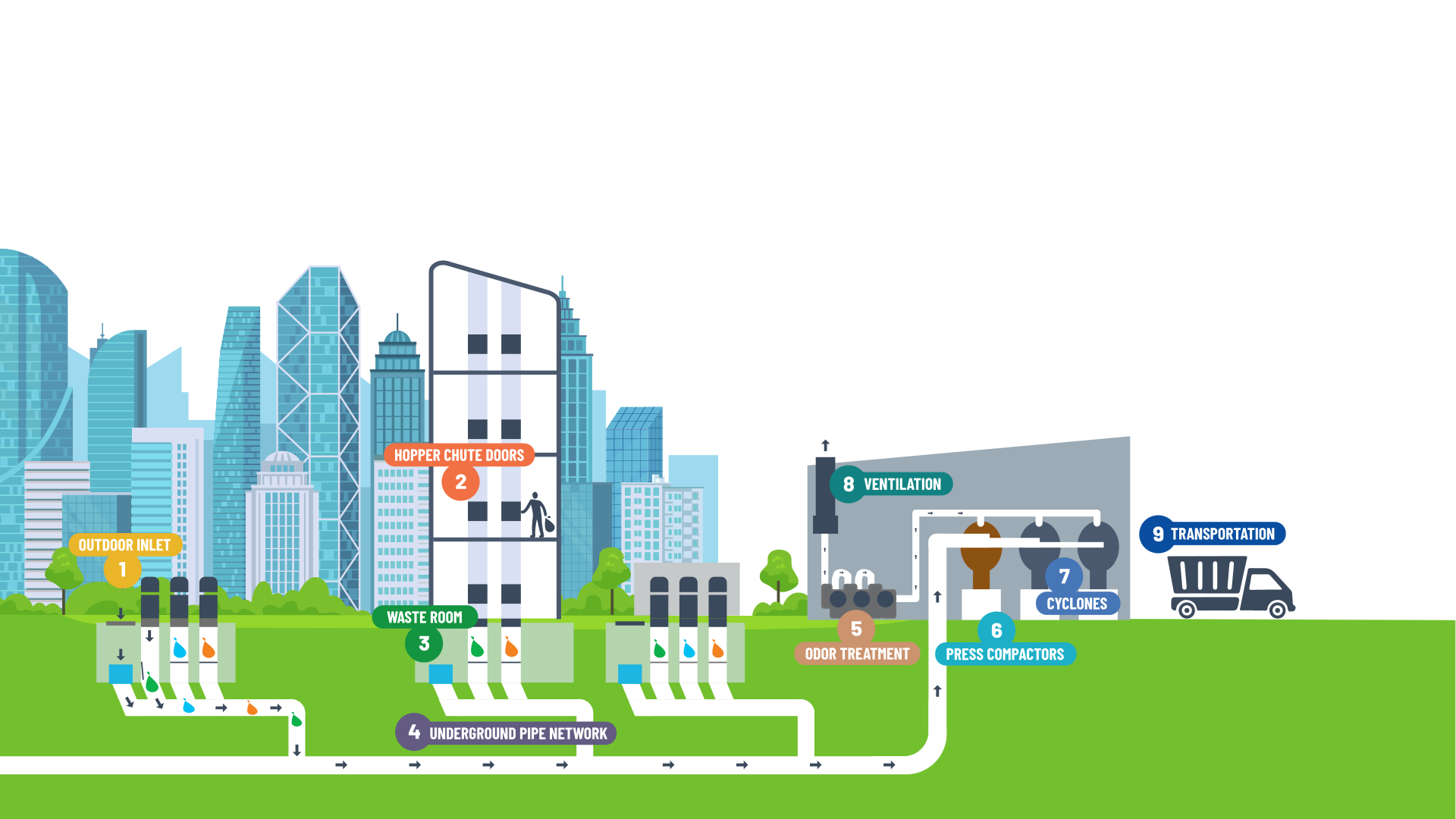
Overview
The future of building waste management
Downwaste offers state-of-the-art pneumatic waste systems, revolutionising waste management for hospitals, high-rise buildings and urban developments. Our pneumatic garbage chutes provide a fully automated, hygienic and efficient alternative to traditional waste collection — reducing manual handling and optimising resource efficiency.
A sealed network of pipes connects every waste inlet in the building to a single central collection plant. A powerful vacuum draws waste through at high speed — no odour escapes, no pest access, no overflow. The collection plant compacts and stores waste until it is ready for removal, reducing the number of vehicle collections required.
Downwaste pneumatic systems have been installed across hospitals, cancer centres, smart city developments and industrial campuses in the UK, Middle East and beyond.

How it works
Five-step automated process
From inlet deposit to clean air venting, the entire waste journey is sealed, automated and monitored.
Step 1
Waste inlet deposit
The user deposits waste or linen into the pneumatic trash chute via a secure, self-closing disposal inlet located on each floor. No manual bin handling required.
Step 2
Automated detection and categorisation
The automated system detects and categorises each waste stream, routing it to the correct collection container and optimising disposal based on waste type.
Step 3
Vacuum transport
Powerful air suction technology transports waste at high speed through a sealed underground or in-wall pipeline network — fully contained and odour-free.
Step 4
Central collection and compaction
The central collection plant receives and compacts waste, storing it in sealed containers ready for efficient removal. No skips on the street — collection is scheduled and controlled.
Step 5
Air filtration and venting
An integrated air filtration system deodorises and cleans the air before venting it into the atmosphere — leaving no smell or contaminants from the process.
System components
Three core components
Wall-mounted waste inlets
Fire-rated self-closing inlet doors fitted flush into the wall at each disposal point. Available in multiple finishes and with optional RFID card access.
High-performance conveyance network
A sealed network of steel-lined pipes carries waste at speeds up to 70 km/h using negative air pressure. Pipes run through service risers, below floors or underground.
Central collection plant
The collection plant houses the compaction units, air filtration equipment and control systems. Sized to suit the building's waste throughput and collection frequency.
Features
Why specify a pneumatic system?
Fully automated
No manual waste bins, no porter rounds, no trolley movements. The system operates automatically — waste is transported from inlet to collection point without human intervention.
Hygienic and odour-free
All waste travels through sealed pipelines. The air filtration system deodorises vented air. No bin liners, no overflow, no odour — ideal for hospitals, hotels and high-density residential.
Reduces labour costs
Eliminating manual waste rounds and bin handling significantly reduces operational labour costs over the building's lifecycle. Typical payback periods of 5–8 years for large schemes.
Supports waste segregation
Separate inlet points and automated routing allow recyclables, general waste and clinical or linen streams to be kept segregated throughout — without additional handling.
RFID access control
Inlets can be fitted with RFID card readers so that only authorised users can deposit waste. Ideal for pay-as-you-throw schemes, data-capture requirements and secure healthcare environments.
Ideal for hospitals and urban developments
Widely specified across hospitals, university campuses, BTR towers, airports and mixed-use urban regeneration schemes where conventional waste collection is impractical.
FAQ
Common questions
What is a pneumatic waste system and how does it work?
A pneumatic waste system is an automated waste collection system that uses vacuum technology to transport waste through a sealed network of pipes. Users deposit waste into designated inlets, and the system sucks the waste to a central collection plant, where it is compacted and stored for disposal. This hygienic, odour-free and efficient system eliminates the need for traditional waste bins and manual collection.
What are the benefits over traditional waste collection?
Pneumatic systems eliminate manual bin rounds, reduce odour and pest risk, improve hygiene, enable waste segregation at source, and can incorporate RFID access control. They are particularly beneficial where space for bin stores is limited, or where a high standard of hygiene is required.
Where are pneumatic chutes typically installed?
Pneumatic waste systems are widely installed in hospitals and healthcare facilities, high-rise residential towers, university campuses, airports, large hotels, and dense urban developments. Any building type where conventional waste collection is impractical or costly can benefit.
How does a pneumatic system support hospital waste management?
In healthcare settings, pneumatic systems are used to transport clinical waste, general waste and soiled linen in segregated streams through sealed pipelines — eliminating the need for porter trolleys to move waste through clinical areas, reducing infection risk and freeing staff time.
Can the system support RFID access control?
Yes. Inlet doors can be fitted with RFID card readers so that only authorised users can deposit waste. This enables pay-as-you-throw schemes, accurate waste data capture by user or apartment, and access restriction in secure environments.
What is involved in a pneumatic chute installation?
The pipeline network, inlet doors and central collection plant are coordinated with the base-build contractor. New-build integration is straightforward; retrofit is possible where service risers are available. Our UK team manages the full scope from design through commissioning.
Are pneumatic waste systems eco-friendly?
Yes. By improving waste segregation rates, reducing vehicle movements (waste lorries make fewer, more efficient collections), and eliminating single-use bin liners across large buildings, pneumatic systems contribute meaningfully to a development's sustainability credentials.
Get a quote
Specify a pneumatic waste system for your project
Whether you are designing a hospital, a BTR tower or an urban regeneration scheme, our UK team can help you specify the right system. Add to your quote or use the estimator to get a guide price.