
DWPC Series · Compactors
Press Compactors
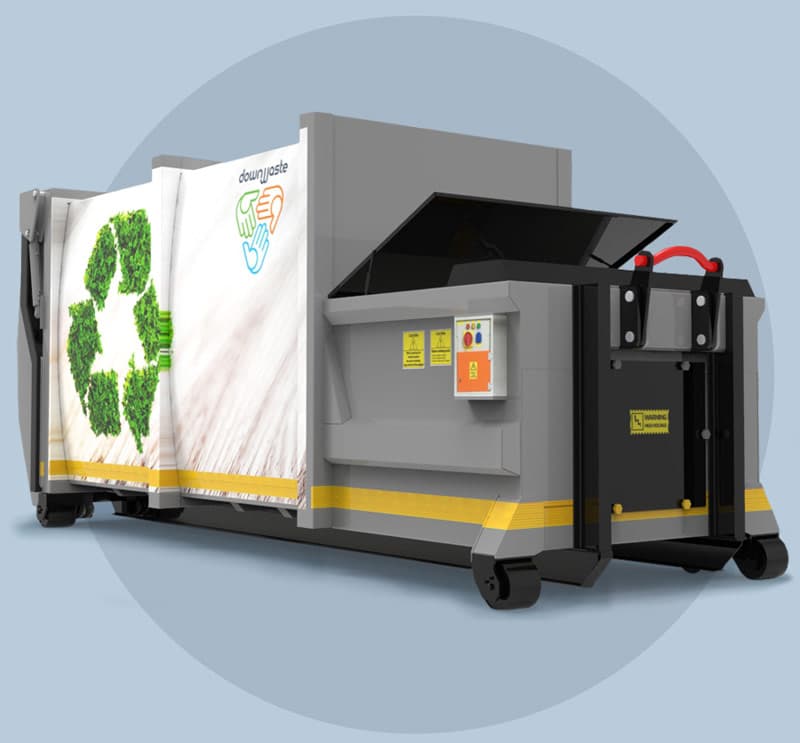
High-capacity hydraulic press compactors that reduce waste volume to 1/6th of its original size. Designed for UK commercial buildings, logistics hubs, and large residential developments — cutting collection costs and simplifying your waste programme.
Overview
Engineered for high-volume UK buildings
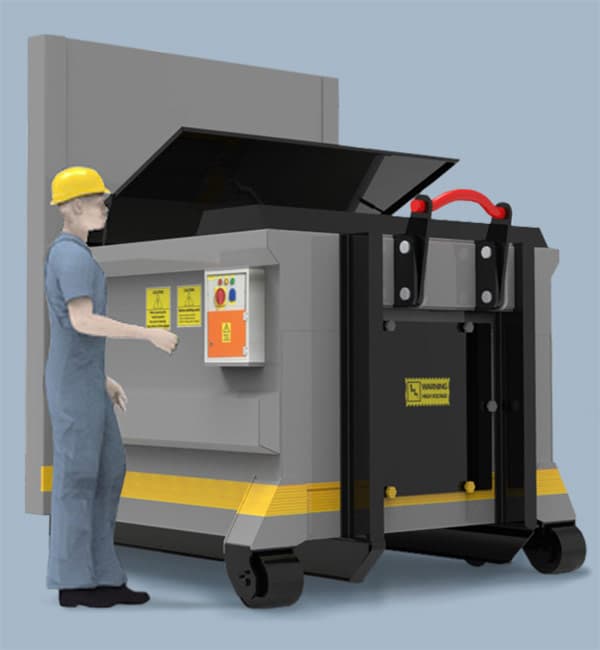
The Downwaste DWPC series deploys into residential, commercial and mixed-use developments across the UK. By compressing waste to just one-sixth of its original volume, the DWPC dramatically reduces skip and vehicle movements — lowering your disposal costs and carbon footprint. Four net capacity options (12, 16, 18 and 20 m³) let M&E engineers specify the right unit at RIBA Stage 3.
Components
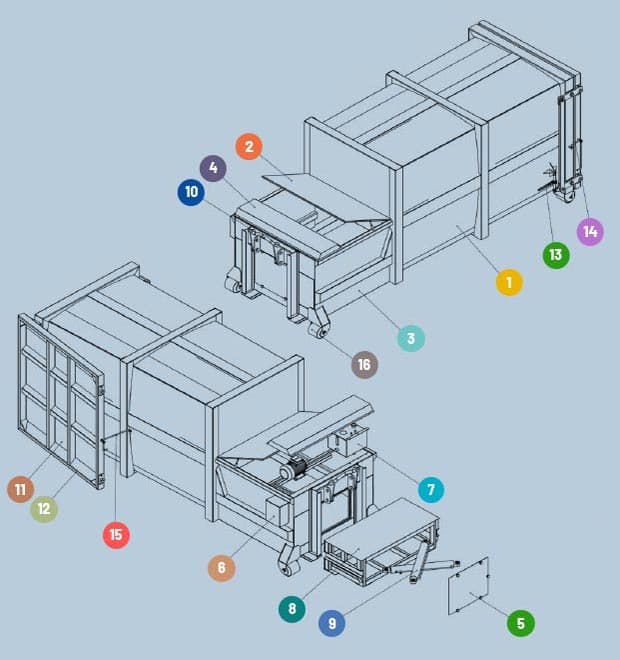
How it's built
Specifications
DWPC model range
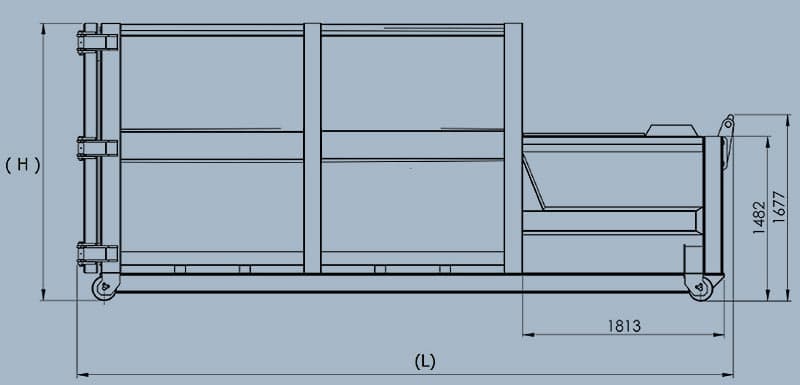
All models: 3 × 400 V PE / 50 Hz · Hydraulic oil tank 28 L · Feed-opening 1,057 × 1,714 mm · Compaction force 4:1
| Model | Net Capacity | Length (L) | Width (W) | Height (H) | Hopper Vol. | Motor |
|---|---|---|---|---|---|---|
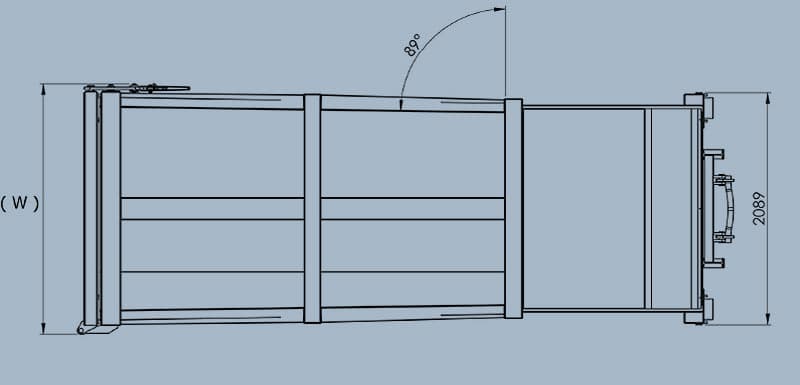
| DWPC 12 | 12 m³ | 5,050 mm | 2,254 mm | 2,497 mm | 1.3 m³ | 5.5 kW |
| DWPC 16 | 16 m³ | 6,050 mm | 2,254 mm | 2,497 mm | 1.3 m³ | 5.5 kW |
| DWPC 18 | 18 m³ | 6,550 mm | 2,254 mm | 2,497 mm | 1.3 m³ | 5.5 kW |
| DWPC 20 | 20 m³ | 7,050 mm | 2,254 mm | 2,497 mm | 1.3 m³ | 5.5 kW |
Technical Drawings
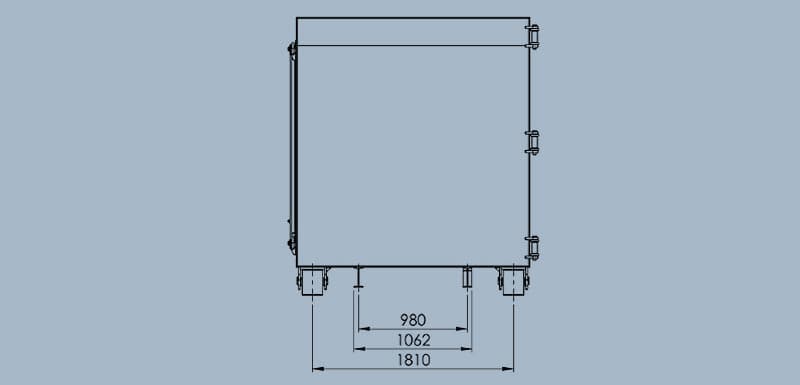
Engineering dimensions
Detailed CAD drawings and BIM files available on request for M&E coordination and principal contractor submittals.
Key Features
Built for UK compliance & cost control
1:6 Volume Reduction
Hydraulic compaction reduces waste to one-sixth of its original volume, dramatically cutting collection frequency and skip hire costs on UK commercial sites.
Leakproof Construction
Full perimeter door sealant and a sealed container body prevent liquid waste and leachate escaping — essential for compliance with UK waste duty-of-care regulations.
Safety Certified
Three-stage discharge door locking (locking mechanism, safety catch, emptying lock) supports PUWER and employer duty-of-care requirements in UK workplaces.
Lift-Off Compatibility
Integral lift-up hooks and fork pockets give compatibility with standard hook-lift lorries and skip wagons common across UK waste collection fleets.
Four Capacity Options
DWPC 12, 16, 18 and 20 m³ variants let M&E engineers and principal contractors specify the correct unit for the building's daily waste generation rate.
Minimal Footprint
Compact compaction unit footprint — under 2,300 mm wide — fits within standard UK plant room and loading dock dimensions without structural alterations.
FAQs
Common questions
What power supply is required?
The DWPC range runs on a 3-phase 400 V / 50 Hz supply (PE) with a 5.5 kW motor and a 28-litre hydraulic oil reservoir. A standard BS 7671 three-phase circuit is sufficient for most UK commercial installations.
Is the DWPC suitable for residential and BTR buildings?
Yes — the sealed, odour-controlled design and quiet hydraulic operation make the DWPC ideal for bin-store rooms in BTR, PBSA and mixed-use buildings. Units can be specified during RIBA Stage 3 to align with M&E coordination.
What materials can it compact?
General mixed waste, dry recyclables, cardboard, packaging and light industrial waste. The compression plate and hydraulic charge pistons handle a wide range of densities. It is not suitable for hazardous, clinical or liquid waste streams.
Can the unit be installed indoors?
Yes. With adequate service clearance (access via the loading lid and service door) and a suitable drainage gulley, the DWPC is routinely specified for internal bin stores. Our team can provide CAD drawings for principal contractor coordination.
What ongoing maintenance is required?
Routine maintenance includes hydraulic oil checks, door seal inspection and compression plate lubrication. Our UK service partners offer planned maintenance contracts and LOLER-compliant inspection programmes.
Ready to specify a press compactor?
Add the DWPC to your quote, or contact our UK technical team to discuss compaction strategy, installation drawings, and programme coordination with your principal contractor.